
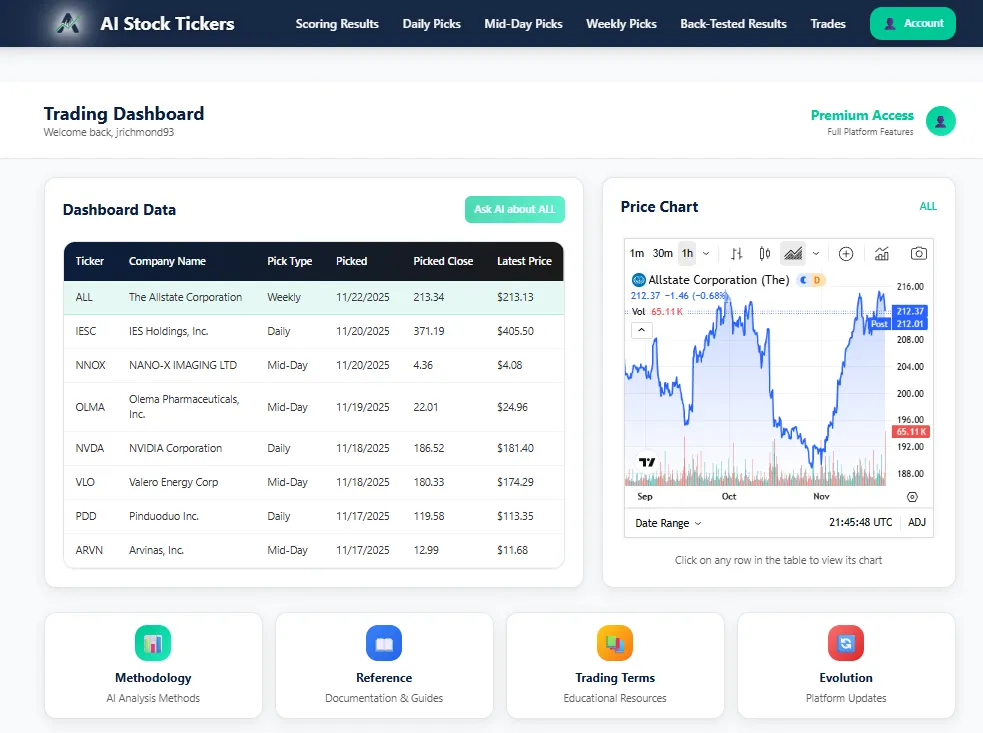
In today’s fast-moving financial environment, relying only on traditional research methods is no longer enough to stay competitive. AI Stock Tickers are transforming how traders and investors approach the market by delivering faster, data-driven insights. Instead of manually tracking multiple stocks and indicators, AI tools process vast amounts of information within seconds. This allows users to identify patterns, spot opportunities, and react quickly to market changes. Whether you are a beginner or an experienced trader, using AI-driven insights helps reduce uncertainty and supports more confident decision-making in both short-term and long-term strategies.
Why AI Is Changing the Way We Analyse Stocks
The stock market generates enormous volumes of data every second, making manual analysis time-consuming and often incomplete. This is where AI Powered Stock Analysis becomes essential. AI systems can evaluate historical trends, real-time price movements, and even external factors like news sentiment. Unlike traditional methods that rely on limited data points, AI combines multiple inputs simultaneously. This leads to more accurate insights and helps traders understand the bigger picture. As markets become more complex, AI offers a practical way to simplify analysis and improve overall efficiency.
How AI Identifies Trading Opportunities
AI tools use advanced algorithms to detect patterns that are not easily visible to human analysts. These systems examine price trends, trading volumes, and behavioural patterns in the market. By doing so, they can highlight potential entry and exit points. This is especially useful for short-term traders who depend on timing. Instead of relying on guesswork, traders can use AI insights to guide their decisions. Over time, this approach helps build a more structured and disciplined trading strategy.
Key Advantages of Using AI in Stock Trading
AI-driven tools offer several benefits that make them valuable for modern investors. Some of the most important advantages include:
-
Faster processing of large datasets
-
Reduced emotional bias in decision-making
-
Better identification of market trends
-
Improved risk management through data analysis
-
Consistent monitoring of multiple stocks at once
-
These features allow traders to operate more efficiently and focus on strategy rather than manual research.
Understanding Algorithmic Trading Strategies
Algorithmic trading is a major component of AI-based stock analysis. It involves using predefined rules to execute trades automatically based on market conditions. These strategies rely on data rather than emotions, which improves consistency. Algorithms can react to market changes instantly, ensuring that opportunities are not missed. This is particularly useful in volatile markets where quick decisions are critical. By using algorithmic strategies, traders can maintain discipline and avoid impulsive actions.
The Role of Machine Learning in Market Predictions
Machine learning enhances AI systems by allowing them to learn from past data and improve over time. As the system processes more information, it becomes better at recognising patterns and predicting outcomes. This continuous learning process increases accuracy and reliability. For traders, this means access to smarter insights that adapt to changing market conditions. Machine learning makes AI tools more dynamic, helping users stay ahead in a competitive environment.
Tracking Institutional Accumulation for Better Insights
Institutional investors often have a significant impact on stock prices. Identifying their activity can provide valuable clues about market direction. AI tools analyse trading volumes and price movements to detect signs of institutional accumulation. This helps traders identify stocks that may have strong growth potential. By understanding where large investments are flowing, users can align their strategies with broader market trends and make more informed decisions.
Using Multi-Factor Analysis for Accuracy
Relying on a single indicator is rarely enough in today’s complex market. AI systems use multi-factor analysis, combining technical indicators, fundamental data, and market sentiment. This approach provides a more complete understanding of a stock’s performance. By evaluating multiple factors at once, AI reduces the risk of false signals. This leads to more balanced decisions and helps traders avoid common mistakes caused by incomplete analysis.
Making the Most of AI Tools
While AI tools provide powerful insights, they work best when combined with human judgment. Traders should use AI as a support system rather than a complete replacement for decision-making. Understanding how to interpret AI-generated data is key to using it effectively. By combining technology with personal research, investors can create a more balanced and reliable strategy. This approach ensures that decisions remain informed and controlled.
Conclusion
The integration of AI into stock trading is reshaping how investors approach the market. With faster analysis, improved accuracy, and data-driven insights, AI tools offer a clear advantage. AI Stock Tickers make it easier to navigate complex market conditions and identify opportunities with confidence. As technology continues to evolve, adopting AI-based strategies can help traders stay competitive and make smarter, more informed decisions in an ever-changing financial landscape.
