
Choosing the right ID badge setup can make a big difference to your organisation’s daily operations. Whether you manage a school, office, healthcare facility, warehouse, retail business, event team or membership organisation, your badges need to look professional, display the right information and support your security requirements.
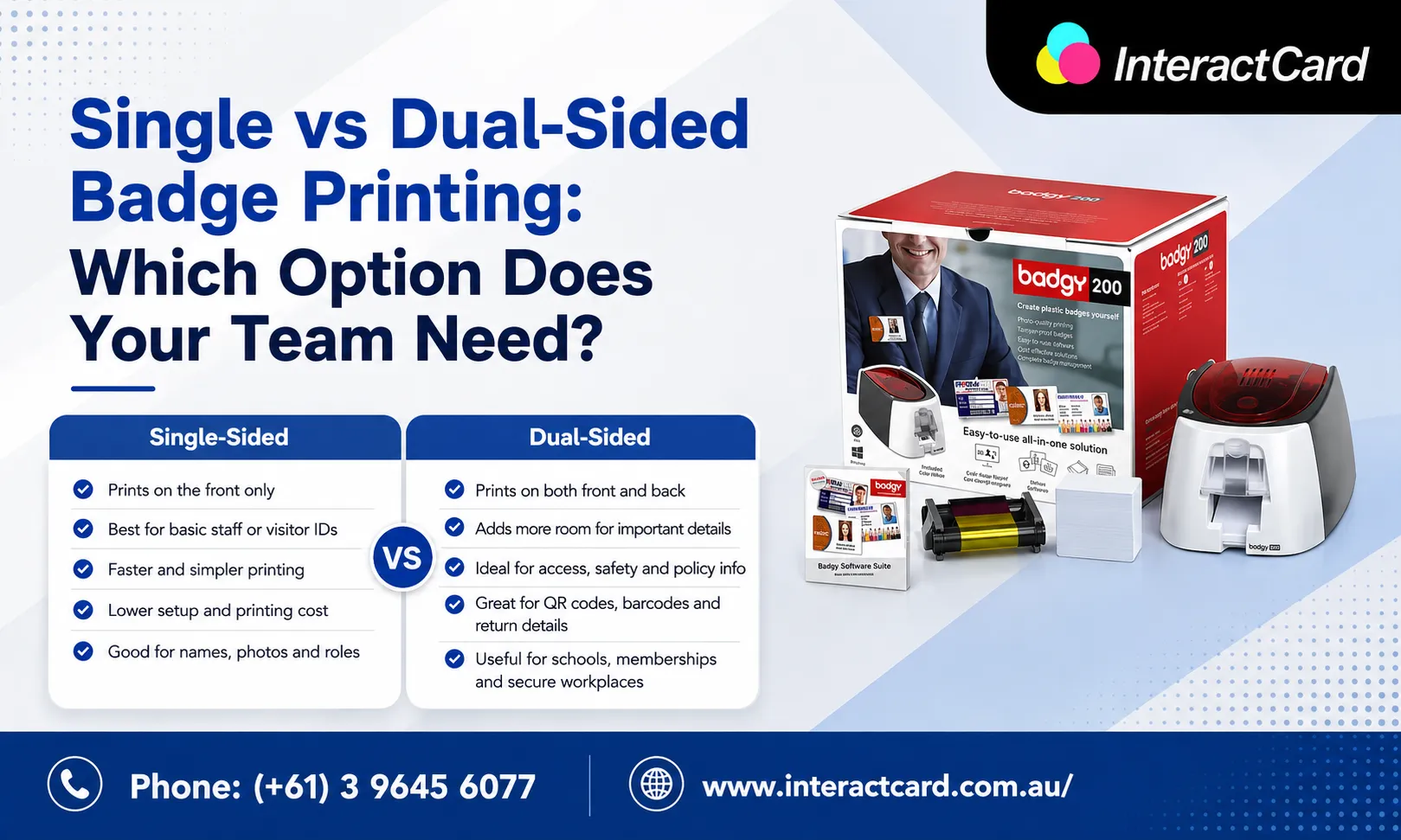
One of the most common questions teams ask is whether they need single-sided or dual-sided badge printing. At first, the answer may seem simple: print on one side if you only need basic details, or print on both sides if you need more information. But in practice, the right choice depends on how your team uses badges every day.
In 2026, many Australian organisations are investing in in-house badge printing because it offers better flexibility, faster turnaround and stronger control over card data. Professional id card printers and reliable card printers machine options now make it easier for businesses to print staff badges, visitor passes, student IDs and membership cards on demand.
This guide explains the difference between single-sided and dual-sided badge printing, the benefits of each option, and how to decide which badge printing setup your team actually needs.
What Is Single-Sided Badge Printing?
Single-sided badge printing means all visible information is printed on the front side of the card. The back side usually remains blank, unless it is pre-printed separately or used for a sticker, barcode label or handwritten note.
A single-sided badge usually includes:
-
Employee or member name
-
Photo
-
Company or school logo
-
Job title or department
-
ID number
-
Barcode or QR code
-
Expiry date
Single-sided printing is often suitable when the badge is mainly used for visual identification. For example, a receptionist, security guard, teacher or event organiser can quickly check the person’s name, photo and role from the front of the badge.
What Is Dual-Sided Badge Printing?
Dual-sided badge printing means information is printed on both the front and back of the card. The front usually contains the main identity details, while the back can carry additional information such as emergency contacts, access instructions, terms of use, return details or safety rules.
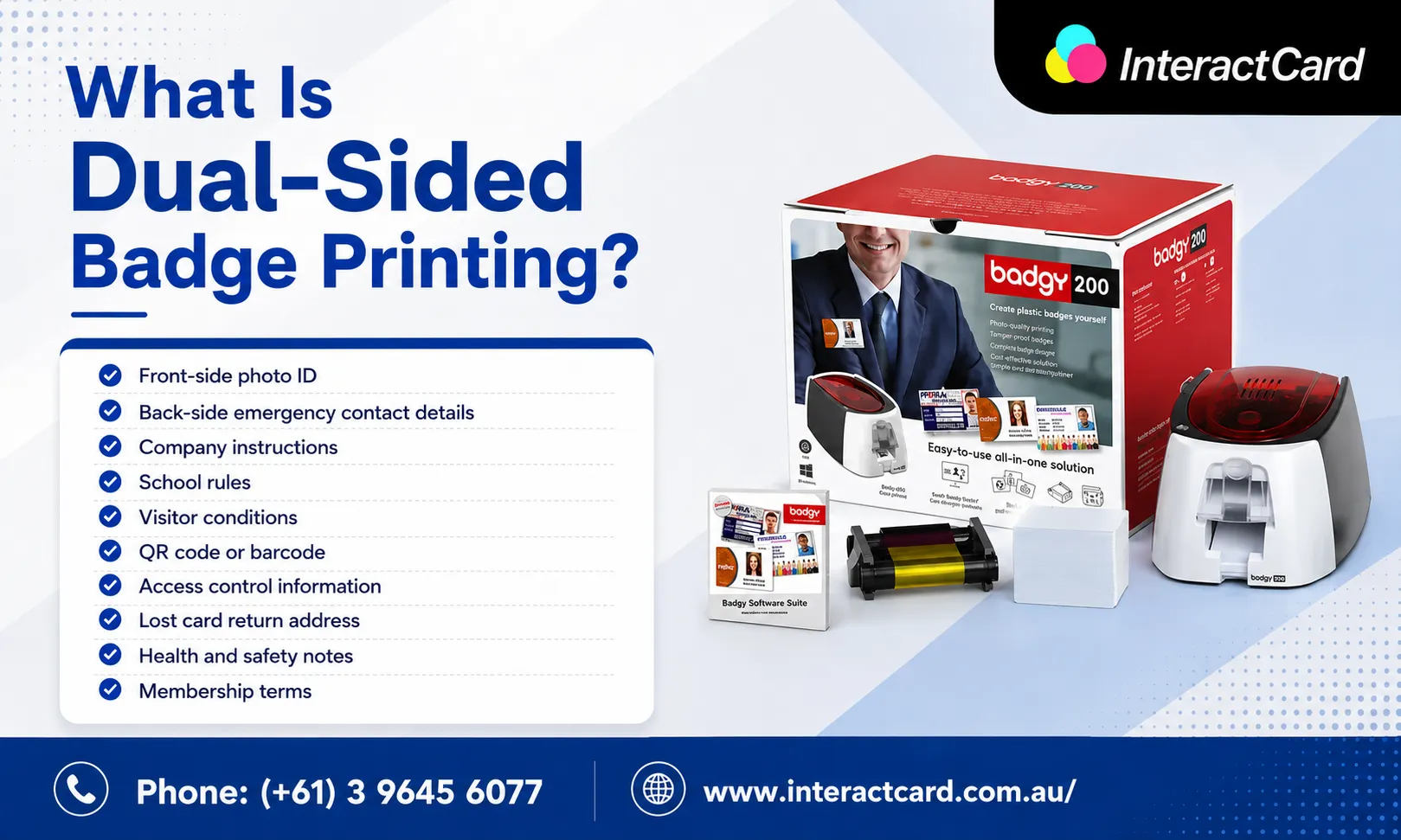
A dual-sided badge may include:
-
Front-side photo ID
-
Back-side emergency contact details
-
Company instructions
-
School rules
-
Visitor conditions
-
QR code or barcode
-
Access control information
-
Lost card return address
-
Health and safety notes
-
Membership terms
Dual-sided printing is useful when your team needs more space without making the badge look crowded.
Single vs Dual-Sided Badge Printing: Quick Comparison
|
Feature |
Single-Sided Badge Printing |
Dual-Sided Badge Printing |
|
Printing area |
Front side only |
Front and back sides |
|
Best for |
Basic visual identification |
More detailed ID and access information |
|
Design simplicity |
Very simple and clean |
More flexible layout |
|
Cost per card |
Usually lower |
Usually slightly higher |
|
Printing speed |
Faster |
Slower than single-sided |
|
Security options |
Basic to moderate |
Better space for security and instructions |
|
Ideal users |
Small teams, visitors, events |
Schools, companies, healthcare, access control |
When Single-Sided Badge Printing Is the Better Choice
Single-sided badges are a practical option for many organisations. They are simple, cost-effective and easy to produce. If your badge only needs to show essential identification details, single-sided printing may be enough.
1. Your Badge Design Is Simple
If your card design only includes a name, photo, role and logo, a single-sided badge can look professional and uncluttered. Many workplaces use this format for everyday staff identification.
A clean front-facing design can also make badges easier to read from a distance. This is especially helpful in customer-facing environments such as retail stores, hotels, gyms and reception areas.
2. You Print Visitor Badges
Visitor badges often do not need detailed information. A basic badge with the visitor’s name, date, company name and visitor category may be enough.
Single-sided visitor badges are useful for:
-
Corporate offices
-
Schools
-
Events
-
Healthcare reception areas
-
Government buildings
-
Warehouses
If visitors only need temporary identification, single-sided printing can keep the process quick and efficient.
3. You Want Faster Printing
Single-sided cards are generally faster to print because only one side of the card needs to pass through the printer. This can matter when you need to print a large number of badges quickly.
For example, an event organiser may need to print hundreds of attendee badges before registration opens. In this case, single-sided printing may help speed up production.
4. You Have a Smaller Budget
Single-sided badge printing may require a lower initial printer investment, depending on the model selected. It may also reduce ribbon usage compared with full dual-sided card designs.
For small businesses, clubs and local organisations, a single-sided identity card printer can be a smart starting point.
When Dual-Sided Badge Printing Is the Better Choice
Dual-sided badge printing gives your organisation more space and flexibility. It is ideal when the card needs to carry more than just basic identity details.
1. You Need More Information on the Card
Trying to fit too much information on the front of a card can make it look crowded and difficult to read. Dual-sided printing solves this problem by separating key information.
For example:
-
Front: name, photo, logo and role
-
Back: emergency contact, barcode, instructions and return details
This creates a cleaner design while still including everything your organisation needs.
2. Your Organisation Has Security Requirements
Dual-sided badges can support better security communication. The back of the card can include access rules, verification instructions, cardholder terms or lost card return information.
For workplaces using access control systems, the back side can also include barcodes, QR codes or printed instructions for scanning.
Industries that often benefit from dual-sided badges include:
-
Healthcare
-
Education
-
Corporate offices
-
Manufacturing
-
Logistics
-
Security services
-
Government contractors
3. You Manage Student or Staff ID Cards
Schools, universities and training providers often need to include more information on student ID cards. A student badge may include the student’s photo and ID number on the front, while the back may include library information, emergency contacts or school policies.
Similarly, employee badges may include department details, access notes or health and safety instructions on the back.
4. You Want a More Professional Card Layout
Dual-sided cards can look more polished because they allow better spacing. Instead of squeezing text, codes and logos into one area, designers can use both sides to create a balanced and professional layout.
This is especially useful for organisations that treat ID cards as part of their brand presentation.
Cost Considerations: Is Dual-Sided Printing Worth It?
Dual-sided printing usually costs more than single-sided printing because it uses more print time and may require a printer with dual-sided capability. However, the extra cost can be worthwhile if your organisation needs the additional space or security benefits.
|
Question |
Choose Single-Sided |
Choose Dual-Sided |
|
Do you only need a name, photo and logo? |
Yes |
Not necessary |
|
Do you need emergency details or instructions? |
Not ideal |
Yes |
|
Is speed the main priority? |
Yes |
Maybe |
|
Is card security important? |
Basic only |
Better option |
|
Do you want a cleaner layout with more details? |
Limited |
Yes |
|
Are cards used daily for access or verification? |
Sometimes |
Strong option |
The best choice is not always the cheapest option. The right choice is the one that supports your team’s daily workflow, improves identification and reduces future reprinting problems.
Choosing the Right ID Card Printer
Once you know whether your team needs single-sided or dual-sided badges, the next step is choosing the right printer.
Professional id card printers are designed specifically for plastic card printing. Unlike standard office printers, they print directly onto PVC or compatible plastic cards using specialist ribbons and printing technology.
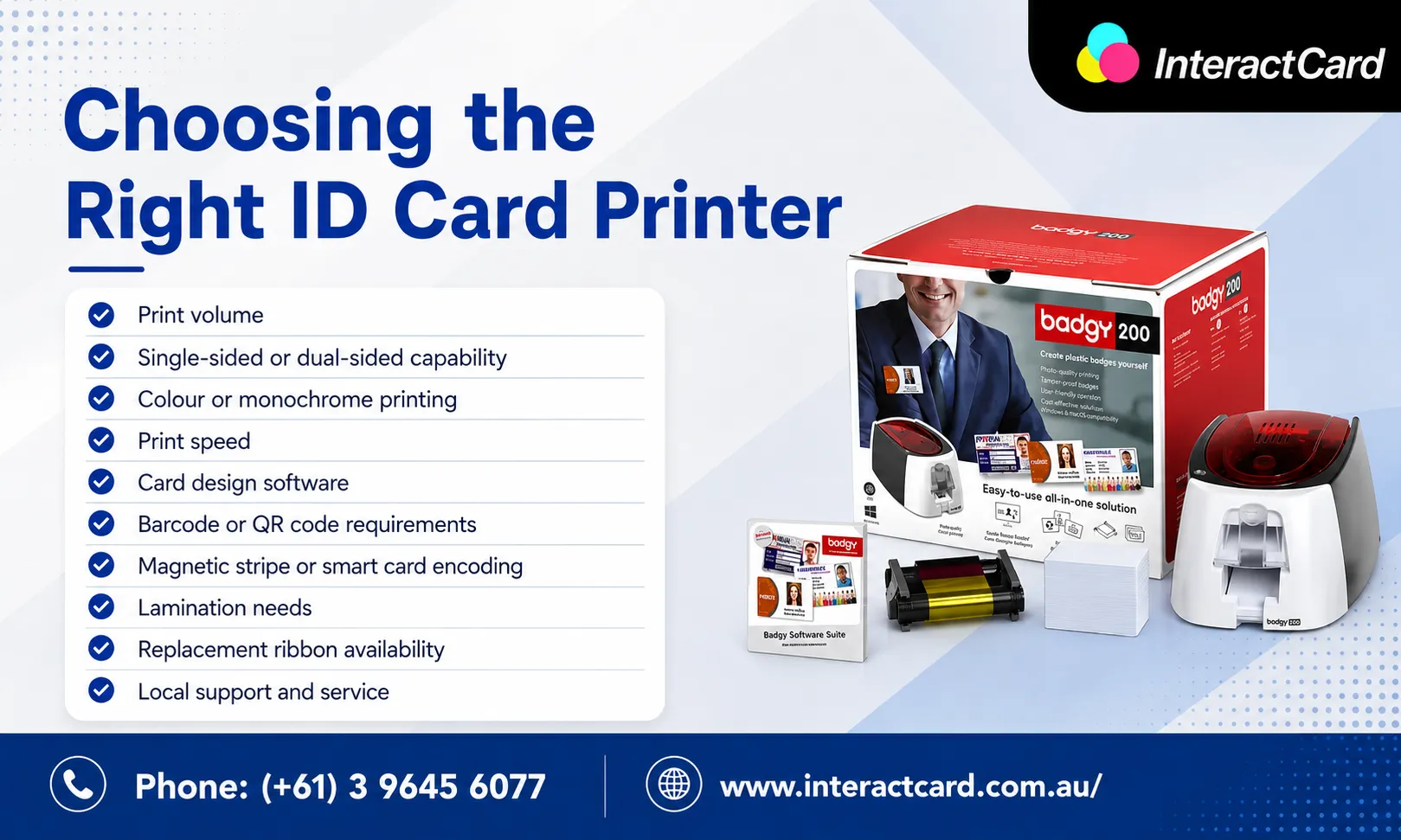
When comparing printer options, consider:
-
Print volume
-
Single-sided or dual-sided capability
-
Colour or monochrome printing
-
Print speed
-
Card design software
-
Barcode or QR code requirements
-
Magnetic stripe or smart card encoding
-
Lamination needs
-
Replacement ribbon availability
-
Local support and service
For basic badge printing, a compact single-sided printer may be enough. For larger organisations, a dual-sided or upgradeable printer may offer better long-term value.
InteractCard: Card Printing Solutions for Australian Teams
InteractCard supplies and supports Evolis plastic ID card printing solutions across Australia, including major cities and regional areas. The company supports customers with printer selection, consumables, accessories and setup guidance, making it easier for organisations to choose the right badge printing system for their needs.
InteractCard’s range includes solutions for:
-
Staff ID badges
-
Student ID cards
-
Visitor badges
-
Membership cards
-
Loyalty cards
-
Event passes
-
Access control cards
-
Plastic card printer ribbons
-
Blank cards and accessories
-
Cleaning kits and printer support
For teams that need simple single-sided printing, InteractCard offers compact options such as Evolis Zenius-style solutions. These are suitable for small and medium card printing needs where efficiency and ease of use matter. For organisations that need higher output, dual-sided capability or more advanced features, InteractCard also supplies Evolis Primacy 2 and other professional printer options.
The Evolis Primacy 2, for example, is positioned as a high-end ID card printer that can produce secure printed plastic cards and can be upgraded with options such as magnetic stripe, smart contact and contactless encoding. This makes it a strong choice for organisations that need flexible and secure card production.
Benefits of Buying from InteractCard
Choosing a specialist supplier is important because badge printing involves more than buying a machine. Your organisation may also need advice on ribbons, cards, cleaning kits, software and long-term maintenance.
Key benefits include:
-
Access to professional Evolis printer options
-
Support for both small and larger organisations
-
Guidance on single-sided vs dual-sided printing
-
Printer ribbons and consumables available online
-
Options for ID cards, membership cards and visitor badges
-
Support across Australia and New Zealand through partner networks
-
Practical help for users with different levels of technical knowledge
InteractCard focuses on helping customers achieve their goals regardless of their skill level. This is valuable for schools, offices, clubs and businesses that want professional badge printing without unnecessary complexity.
Final Recommendation: Which Option Does Your Team Need?
Single-sided badge printing is best for teams that need simple, fast and cost-effective ID cards. It works well for small offices, visitor badges, events, retail staff badges and basic membership cards.
Dual-sided badge printing is better for organisations that need more space, stronger security details, emergency information, access instructions or a more complete professional ID card system. It is especially useful for schools, healthcare providers, corporate offices, warehouses and larger teams.
If your organisation is unsure which option is right, InteractCard can help you compare printer models, features and consumables based on your actual card printing needs. Whether you need a compact identity card printer for simple badges or advanced id card printers for secure dual-sided cards, InteractCard offers reliable solutions to help your team print professional badges with confidence.
