
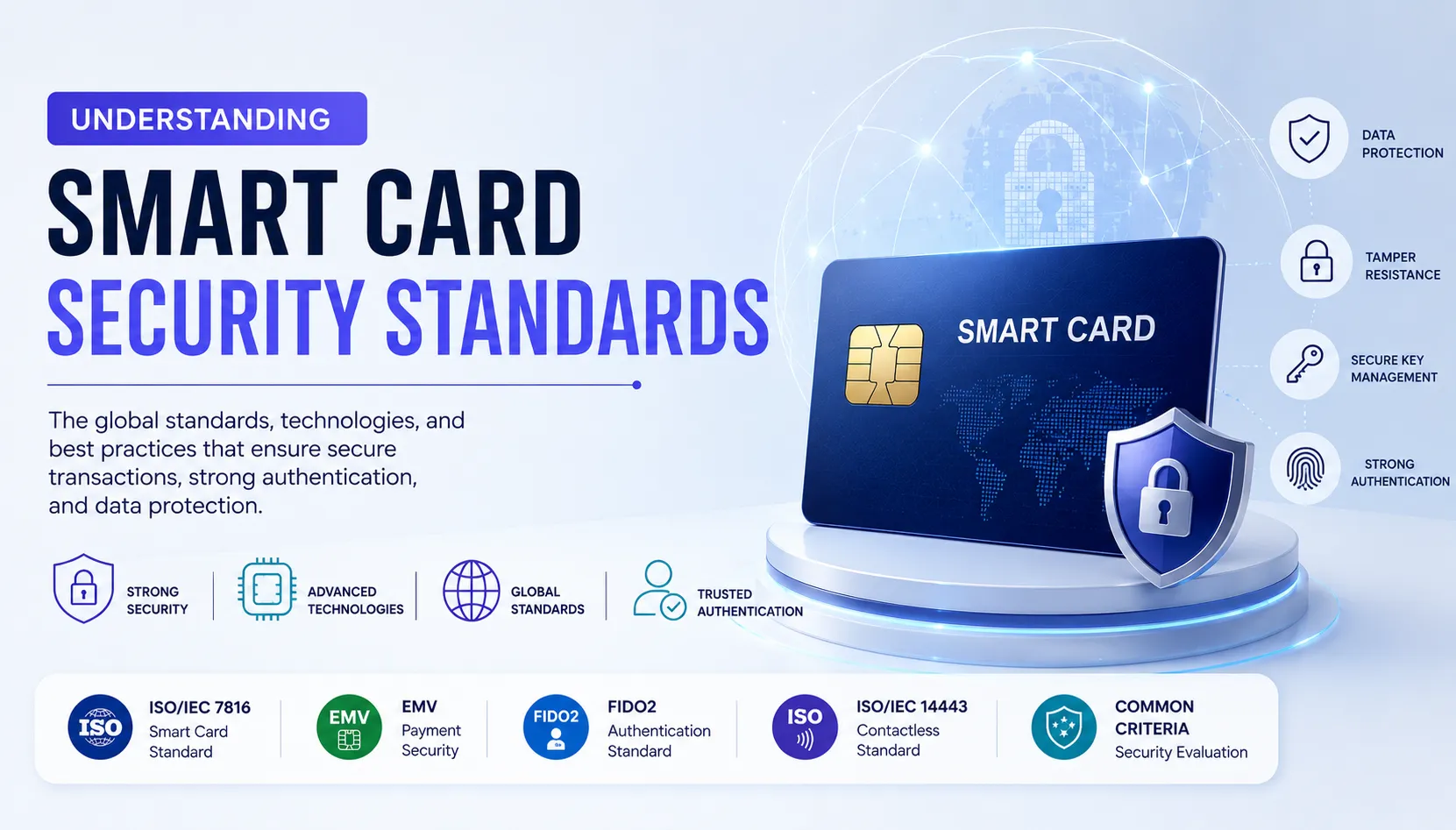
Smart card security standards establish the framework for secure payments, digital identity verification, and cryptographic authentication. Standards such as EMV, FIDO2, ISO/IEC 7816, and Common Criteria help protect sensitive data, prevent fraud, and enable secure transactions across banking, enterprise, and Web3 ecosystems.
As digital payments, blockchain applications, and decentralized finance continue to grow, security has become a top priority for both individuals and businesses. Smart cards are among the most trusted technologies for protecting sensitive data, authenticating users, and securing transactions. From payment cards to digital identity solutions and cryptocurrency storage, smart card security standards ensure that users can interact with digital ecosystems safely and confidently.
Modern solutions such as a Crypto smartcard combine advanced security standards with practical functionality, enabling users to manage digital assets, authenticate identities, and make secure payments from a single device.
What Are Smart Card Security Standards?
Smart card security standards are internationally recognized frameworks that define how smart cards store, process, and protect sensitive information. These standards establish strict requirements for encryption, authentication, secure key storage, and resistance against physical attacks.
Whether you’re using a Hardware wallet card for cryptocurrency storage or a payment card for everyday purchases, these standards ensure that personal and financial information remains protected.
Some of the most important smart card security standards include:
-
EMV (Europay, Mastercard, and Visa)
-
FIDO2 Authentication Standards
-
ISO/IEC 7816 Smart Card Standards
-
ISO/IEC 14443 Contactless Standards
-
Common Criteria Certification
These standards help manufacturers build secure products capable of defending against cyber threats, fraud, and unauthorized access.
EMV Standards and Payment Security
EMV technology has transformed payment security worldwide. An EMV crypto card uses embedded microprocessors that generate unique transaction data every time a payment is made. Unlike traditional magnetic stripe cards, EMV cards are extremely difficult to clone, making them significantly more secure.
This technology is particularly important as digital payments evolve to include cryptocurrencies and stablecoins. Users seeking secure Stablecoin payments and Cross-border crypto payments increasingly rely on EMV-compliant solutions to protect their transactions.
A modern Crypto debit card built on EMV standards provides enhanced protection while maintaining compatibility with existing payment infrastructure.
FIDO2 and Passwordless Authentication
Authentication remains one of the biggest security challenges in the digital world. Traditional passwords can be stolen, reused, or compromised through phishing attacks. This is where FIDO2 smartcard technology provides a major advantage.
FIDO2 uses public-key cryptography to enable secure Passwordless authentication. Instead of relying on passwords, users authenticate themselves through cryptographic credentials stored securely within the card.
The private key never leaves the secure element, significantly reducing the risk of credential theft. As businesses move toward stronger cybersecurity practices, FIDO2-compliant solutions are becoming essential for secure access management.
Many users also prefer a FIDO2 hardware wallet because it combines strong authentication with secure cryptocurrency storage.
Smart Cards in Web3 and Digital Asset Security
The growth of Web3 has introduced new challenges in managing private keys and protecting digital assets. Many cryptocurrency users still rely on software wallets, which can be vulnerable to malware, phishing attacks, and device compromises.
A Web3 hardware wallet addresses these concerns by storing cryptographic keys within a secure smart card environment. Unlike software wallets, private keys remain isolated from internet-connected devices.
Similarly, a Self-custodial wallet card gives users complete ownership of their assets while eliminating dependence on third-party custodians.
For users seeking a Self-custodial crypto card, this approach offers the ideal balance between security, convenience, and control.
Tamper-Resistant Security Architecture
One of the defining characteristics of smart card technology is its ability to resist physical attacks. A Tamper-resistant crypto wallet incorporates specialized hardware designed to detect and prevent unauthorized attempts to access sensitive data.
These security mechanisms include:
-
Secure key storage
-
Hardware encryption
-
Side-channel attack protection
-
Anti-tampering detection
-
Secure boot processes
This level of protection is often referred to as Banking-grade security wallet technology because it meets the rigorous requirements used within the financial services industry.
Many advanced smart card solutions leverage technologies similar to the Cryptnox card architecture, delivering enterprise-level security for digital assets and identity management.
Supporting On-Chain Transactions and Modern Payments
As blockchain adoption accelerates, users increasingly require solutions that bridge traditional financial systems with decentralized networks. A Web3 payment card enables secure interactions with both digital assets and conventional payment networks.
These cards support secure On-chain transactions while offering practical benefits such as:
-
Cryptocurrency spending
-
Digital identity verification
-
DeFi access
-
Global payment acceptance
-
Asset management
Many users are particularly interested in a Web3 wallet and debit card that combines digital asset storage with everyday payment functionality.
The Future of Smart Card Security
The convergence of blockchain technology and smart card standards is creating innovative financial solutions. Products such as a Crypto to fiat card allow users to convert digital assets into spendable funds quickly and securely.
Similarly, a Mastercard crypto card can provide access to global payment networks while maintaining many of the benefits associated with decentralized asset ownership.
Emerging capabilities such as:
-
24/7 crypto settlements
-
Crypto off-ramp services
-
Stablecoin cross-border payments
-
Crypto remittance card functionality
are helping transform how individuals and businesses use digital assets in everyday life.
As these technologies continue to mature, smart card security standards will remain critical for protecting users from evolving cyber threats and financial fraud.
Conclusion
Smart card security standards form the foundation of secure digital payments, authentication systems, and Web3 asset management. From EMV transaction protection to FIDO2 authentication and self-custodial cryptocurrency storage, these standards ensure that users can interact with digital ecosystems safely.
Whether you’re looking for a Crypto smartcard, understanding the security standards behind these technologies is essential for making informed decisions.
As digital finance continues to evolve, smart cards will play a central role in delivering secure, convenient, and trusted access to the future of payments and digital asset ownership.
