
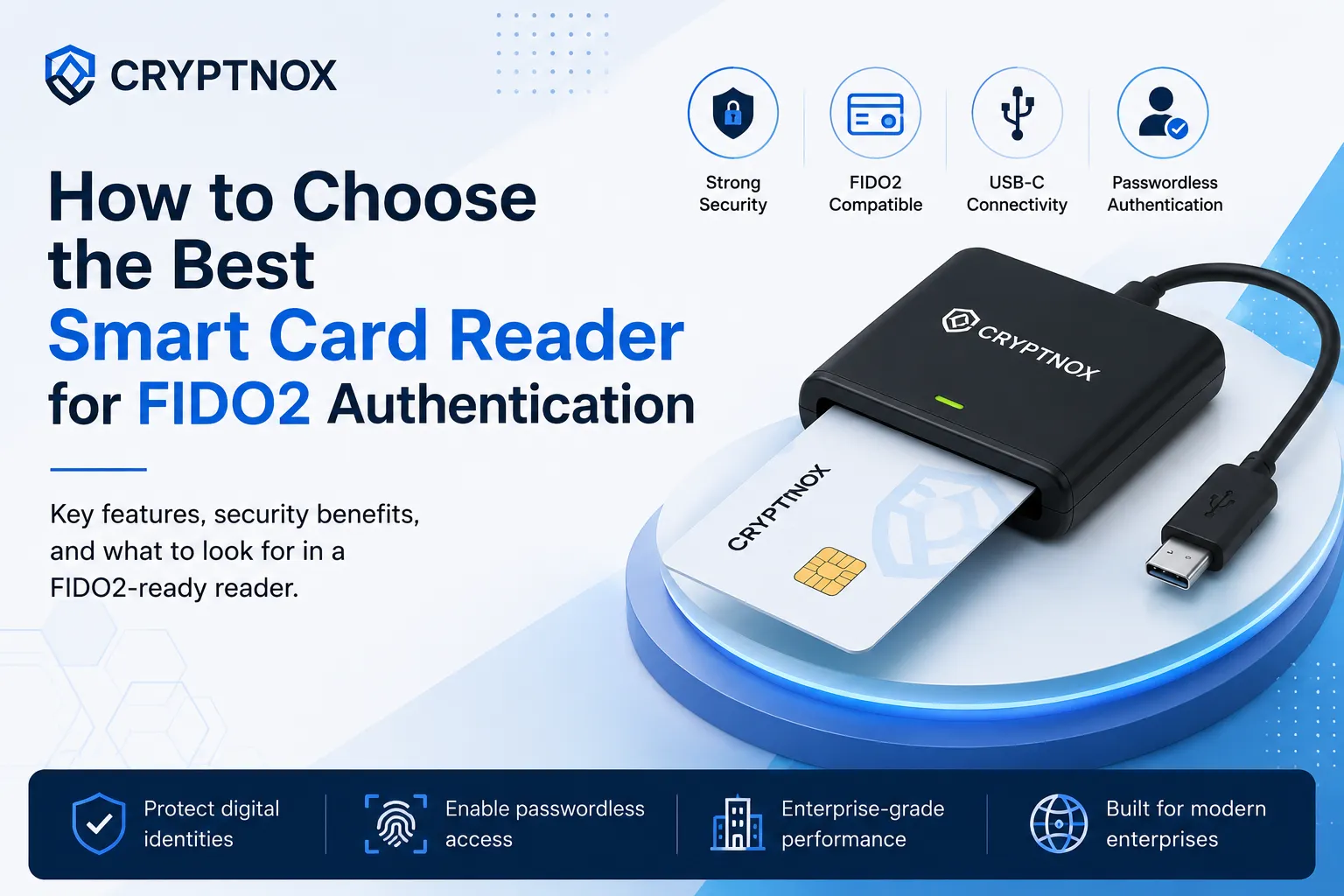
Cybersecurity threats continue to evolve, making traditional password-based authentication increasingly vulnerable to phishing, credential theft, and brute-force attacks. As organizations transition toward passwordless security, FIDO2 authentication has emerged as one of the most effective methods for protecting user identities and enterprise systems. However, deploying FIDO2 credentials requires compatible hardware that can securely communicate with smart cards and authentication devices. Choosing the right FIDO2 card reader is therefore a critical step in building a secure authentication infrastructure.
Whether you’re an IT administrator, cybersecurity professional, or enterprise decision-maker, understanding the key features of a FIDO2 card reader will help you select a solution that balances security, compatibility, and long-term reliability.
Why FIDO2 Authentication Is Becoming the New Standard
FIDO2 is an open authentication standard developed to eliminate passwords and replace them with cryptographic credentials stored on secure hardware devices. Instead of relying on passwords that can be stolen or reused, FIDO2 uses public-key cryptography to verify user identities.
This approach offers several advantages:
-
Protection against phishing attacks
-
Strong cryptographic authentication
-
Elimination of password reuse
-
Improved user experience
-
Reduced IT support costs associated with password resets
To access these benefits, organizations need a reliable FIDO2 card reader capable of securely communicating with compatible smart cards.
What Does a FIDO2 Card Reader Do?
A FIDO2 card reader acts as the communication interface between a computer and a FIDO2-enabled smart card. It allows authentication software to securely exchange encrypted information with the card while ensuring private keys remain protected inside the secure element.
Unlike software-based authentication methods, smart card readers never expose sensitive credentials to the host computer. Instead, cryptographic operations occur directly on the smart card.
This architecture significantly reduces the attack surface available to cybercriminals while supporting secure passwordless authentication across enterprise environments.
Essential Features to Look For
Selecting the right smart card reader involves evaluating several technical and operational factors. The following features should be considered before making a purchasing decision.
Broad Operating System Compatibility
A quality reader should support widely used enterprise operating systems, particularly Windows and Linux. Broad compatibility simplifies deployment across diverse IT environments and minimizes integration challenges.
Reliable USB Connectivity
Modern organizations increasingly prefer USB-C connectivity because it supports current laptops and workstations while providing reliable performance.
A high-quality USB smart card reader should provide stable communication without requiring complex installation procedures.
Smart Card Standard Support
Ensure the reader supports widely adopted smart card standards such as ISO 7816. Compatibility with industry standards improves interoperability across authentication platforms and enterprise applications.
Durable Enterprise Design
Authentication devices often experience daily use in business environments. A robust construction helps ensure long-term reliability while reducing maintenance and replacement costs.
Why Hardware Quality Matters
Not all smart card readers are built for enterprise security. Lower-quality devices may introduce compatibility issues, communication failures, or limited software support.
A well-designed Cryptnox smart card reader offers dependable communication with authentication cards while supporting enterprise-grade security requirements.
Reliable hardware helps organizations avoid:
-
Authentication failures
-
Device compatibility problems
-
Driver conflicts
-
Unstable connections
-
Increased IT support requirements
Selecting enterprise-grade hardware improves both security and operational efficiency.
Supporting Passwordless Authentication
Passwordless authentication is becoming a key objective for organizations implementing Zero Trust security strategies. By eliminating passwords, businesses reduce one of the most common attack vectors used by cybercriminals.
A FIDO2-compatible smart card reader enables secure authentication by allowing users to verify their identity using cryptographic credentials instead of passwords.
The advantages of passwordless authentication include:
-
Faster login experiences
-
Reduced phishing risks
-
Stronger identity verification
-
Improved user productivity
-
Simplified credential management
Organizations investing in passwordless authentication infrastructure should prioritize hardware that delivers consistent performance and long-term reliability.
Deployment Considerations for Enterprise IT
Before selecting a FIDO2 card reader, IT administrators should evaluate how the device will fit within their existing authentication ecosystem.
Important questions include:
-
Is the reader compatible with current authentication software?
-
Does it support enterprise operating systems?
-
Can it be deployed across multiple workstations?
-
Is driver installation straightforward?
-
Does it meet organizational security policies?
Planning for these requirements in advance simplifies deployment and reduces future operational challenges.
Future-Proofing Your Authentication Infrastructure
The cybersecurity landscape continues to evolve, with organizations increasingly adopting passwordless identity solutions and stronger authentication frameworks.
Investing in a high-quality FIDO2 card reader ensures your authentication infrastructure remains prepared for future developments in identity security.
As digital identities become more valuable and cyber threats more sophisticated, hardware-based authentication will continue playing a central role in enterprise cybersecurity.
Organizations implementing scalable authentication solutions today will be better positioned to support future technologies such as Zero Trust Architecture, digital identity ecosystems, secure certificate management, and advanced enterprise authentication.
Common Mistakes to Avoid
When choosing a smart card reader, organizations should avoid focusing solely on price.
Instead, prioritize:
-
Proven hardware reliability
-
Enterprise compatibility
-
Long-term software support
-
Industry-standard compliance
-
Secure authentication performance
Choosing the wrong reader can lead to deployment delays, increased support costs, and inconsistent authentication experiences.
Conclusion
Selecting the best smart card reader for FIDO2 authentication requires careful evaluation of security, compatibility, durability, and enterprise readiness. A reliable FIDO2 card reader serves as the foundation for secure passwordless authentication by enabling protected communication between users and their digital credentials.
Organizations implementing modern identity security strategies should invest in trusted hardware solutions such as the Cryptnox smart card reader. With support for enterprise authentication, secure smart card communication, and evolving passwordless authentication standards, the right reader helps build a stronger, more resilient cybersecurity infrastructure for years to come.
