
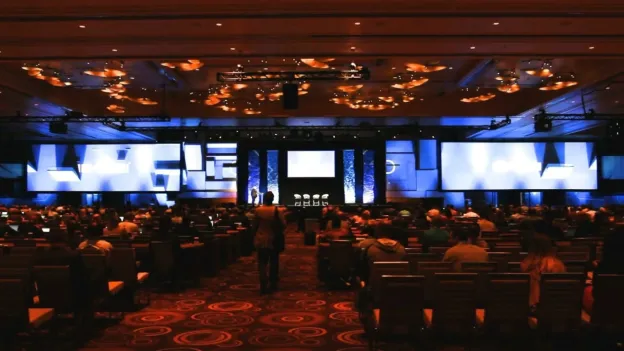
The lights go down, the last guest leaves, and the post-event report lands with a single headline number: how many people showed up. It feels like a natural place to stop, but attendance alone says almost nothing about whether an event actually delivered value. Any experienced event organizer in UAE businesses will point to a broader set of metrics, ones that reveal whether attendees engaged, remembered, and acted, not just whether they walked through the door.
Attendance answers a logistics question: did enough people turn up to justify the venue and budget? It doesn’t answer the questions that actually matter to stakeholders, like whether the event moved the needle on brand perception, generated real leads, or left attendees with something worth remembering weeks later.
Engagement Tells You Whether People Actually Participated
A packed room doesn’t guarantee a captivated one. Engagement metrics capture what attendees actually did once they arrived: how long they stayed at a booth, how many sessions they attended beyond the keynote, how actively they used interactive elements like polls, apps, or gamified activities built into the event.
For exhibitions in particular, dwell time at a stand is often a far more honest signal than foot traffic. A booth that draws a crowd for thirty seconds of curiosity tells a very different story than one where visitors linger for meaningful conversations, and that distinction rarely shows up in a simple headcount.
Lead Quality Matters More Than Lead Volume
Collecting business cards or badge scans is easy; collecting leads that actually convert is the real objective. Post-event evaluation should look past the raw number of contacts gathered and dig into lead quality: how many attendees fit the target buyer profile, how many requested follow-up conversations, and how many progressed through the sales pipeline in the weeks after the event.
A smaller pool of highly qualified leads frequently outperforms a much larger pool of casual contacts who scanned a badge for a free gift and never engaged again. Tracking conversion rate from event lead to sales opportunity gives a far clearer picture of ROI than attendance figures ever could.
Social And Digital Reach Extends the Event’s Lifespan
An event’s impact doesn’t end when the doors close. Social media mentions, shares, tagged posts, and hashtag usage extend an event’s reach well beyond the people physically present, often to audiences many times larger than the in-person crowd. Tracking impressions, engagement rate on event-related content, and follower growth during and after the event reveals how far the brand’s message actually traveled.
Website traffic spikes tied to the event, whether from a dedicated landing page or increased branded search volume, offer another layer of insight into how much curiosity or interest the event generated beyond the venue itself.
Brand Sentiment Reveals the Emotional Takeaway
Numbers alone don’t capture how people felt. Post-event surveys, session feedback forms, and social listening tools can reveal whether attendees left with a positive impression, a neutral one, or genuine enthusiasm for the brand. This sentiment data matters because it predicts future behavior, whether that’s returning to next year’s event, recommending the brand to peers, or engaging with future marketing outreach.
Comparing sentiment across different touchpoints, the keynote, the exhibition floor, the networking reception, can also highlight which elements of the event resonated most, informing smarter decisions for future planning.
Cost Per Meaningful Outcome, Not Just Cost Per Attendee
Budget conversations often default to cost per attendee, but this metric can be misleading. A cheaper event with lower attendance but stronger lead quality and conversion may deliver significantly better value than a larger, more expensive one that generated plenty of foot traffic but few meaningful outcomes. Calculating cost per qualified lead, cost per conversion, or cost per unit of measurable engagement gives a far more accurate picture of whether the investment paid off.
Retention and Repeat Engagement Signal Long-Term Value
For recurring events, one of the most telling metrics is how many attendees return the following year, or how many engage with the brand again through subsequent touchpoints. High attendance with low retention often signals a one-time novelty draw rather than a genuinely compelling experience, while strong repeat attendance suggests the event is building lasting relationships rather than just filling seats.
Building a Post-Event Report That Actually Informs Strategy
A useful post-event report goes beyond attendance as the headline figure. It should pull together:
● Engagement data: How attendees actually interacted, not just showed up.
● Lead quality: How many contacts were genuinely qualified prospects.
● Digital reach: Social mentions, shares, and website traffic generated.
● Sentiment: How attendees felt about the experience overall.
● Cost efficiency: Value delivered per qualified outcome, not per attendee.
Together, these give stakeholders a genuinely complete picture of what worked and what didn’t, one that a single attendance number could never capture, and it’s this fuller story that actually shapes smarter decisions for the next event.
Conclusion
Attendance is easy to measure and easy to report, but it rarely tells the full story of an event’s success. Engagement levels, lead quality, digital reach, sentiment, and cost efficiency together paint a far more accurate picture of whether an event delivered real value. Partnering with an experienced event organizer in the UAE ensures these deeper metrics are built into the planning and reporting process from the start, rather than treated as an afterthought once the event has already wrapped.
Markable is a leading event management agency operating across the UAE and the wider MENA and European regions, delivering end-to-end corporate events, exhibitions, and AV solutions. With over 12 years of experience and thousands of successful projects, Markable helps brands measure impact well beyond a simple headcount.
